


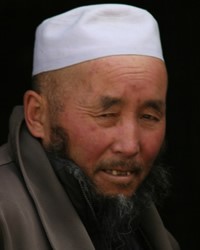

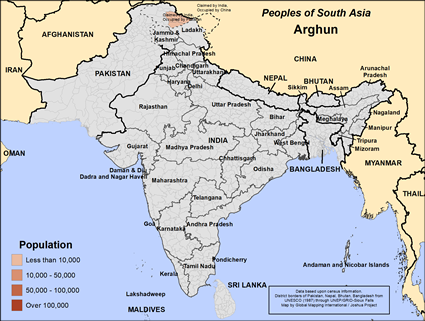
The Arghun people in Pakistan derive their name from a Persian word meaning "reddish" or "beautiful red color." Historically, the name is also linked to the Arghun clan, a group of Turco-Mongol origin that once ruled parts of southern Afghanistan and Sindh during the late 15th and early 16th centuries.
Over time, the name "Arghun" came to identify smaller communities in the region rather than a ruling dynasty. Today, they are a localized Muslim group within Pakistan, with limited historical documentation about their development as a distinct people group beyond their cultural and linguistic integration into surrounding society.
The Arghun live within traditional South Asian Muslim community structures. Family life is important, and social customs are clearly defined. Women are noted to have relatively high status within the household, including rights to inheritance.
Marriage and family identity are marked by visible customs, and life-cycle events such as death are observed with established Islamic practices. After death, the body is washed, funeral prayers are performed, and burial follows. A memorial observance is held later, during which verses from the Koran are recited.
Daily life is shaped by family relationships, religious observance, and local traditions. Like many communities in the region, their lifestyle reflects a blend of Islamic practice with cultural customs that have developed over generations.
The Arghun are Sunni Muslims, following the Hanafi school of Islamic law. Their beliefs center on the core teachings of Islam: belief in Allah, the authority of the Prophet Muhammad, and obedience to the Koran and Hadith.
They practice the Five Pillars of Islam, including daily prayers, fasting during Ramadan, giving alms, and pilgrimage to Mecca when possible.
At the same time, there is evidence of syncretism. Alongside formal Islamic belief, they also hold to spiritual ideas involving unseen forces or spirits, which they may attempt to influence through charms or amulets. This reflects a blending of orthodox Islam with folk religious practices.
Spiritually, the Arghun remain in need of clear exposure to the gospel. While they identify strongly with Islam, their belief system includes both formal religious practice and reliance on spiritual intermediaries, indicating a lack of understanding of a personal relationship with God.
They need access to Scripture and faithful witness that presents the message of Jesus Christ clearly and respectfully within their cultural context.
Practically, as a small and relatively unnoticed community, they may also lack focused attention in areas such as education, development, and long-term support, making them easy to overlook.
Pray that the Arghun people would come to understand the truth of the gospel and place their faith in Jesus Christ.
Ask God to raise up faithful workers who will engage the Arghun with wisdom, humility, and perseverance.
Pray that the Arghun would be adopted through the People Group Adoption program, leading to sustained prayer and intentional gospel outreach.
Pray that those who come to faith would grow in spiritual maturity and begin to disciple others within their community.
Scripture Prayers for the Arghun in Pakistan.
https://en.wikipedia.org/wiki/Arghun_dynasty
https://en.wikipedia.org/wiki/History_of_Sindh
| Profile Source: Joshua Project |



